By: The Nature Conservancy
January 2026
What if I told you there was a program that could improve Iowa’s water quality, reduce flooding, make the state healthier, bring in tourism dollars, revitalize rural communities AND benefit farmers’ bottom line? Sounds like something Iowans could get behind, right?
What if I told you it already exists? In fact, it’s been around since 2010, when more than 60% of Iowans voted yes on a ballot initiative to create the Natural Resources and Outdoor Recreation Trust Fund — designed to help achieve all of these goals.
Support for the fund hasn’t waned — in fact, it has strengthened. High-profile water issues in Des Moines and headlines about Iowa’s cancer rates have added a new sense of urgency. And resistance doesn’t come from the farmers who would ultimately benefit. Survey work by Iowa’s Water & Land Legacy (IWILL), a coalition committed to funding the trust, shows most farmers support it.
So, what’s been the holdup? Funding hinges on an increase in Iowa’s sales tax, and there hasn’t been one since the fund was established 16 years ago. Legislative efforts have come close — most recently in a governor-backed 2020 bill that was ultimately derailed by the COVID-19 pandemic. But with that in the rearview mirror, it’s time to make the investments in our land and waterways that Iowans voted for.
How it works
If Iowa increases its sales tax, the first 3/8ths of a cent increase are earmarked for the Natural Resources and Outdoor Recreation Trust Fund. Once that tap is turned on, the fund will be replenished annually. That continuity is critical when it comes to driving lasting change at scale. On a good year, that could equate to $260 million in annual funding, says Amber Markham, director of external affairs for The Nature Conservancy and an advocate for IWILL.
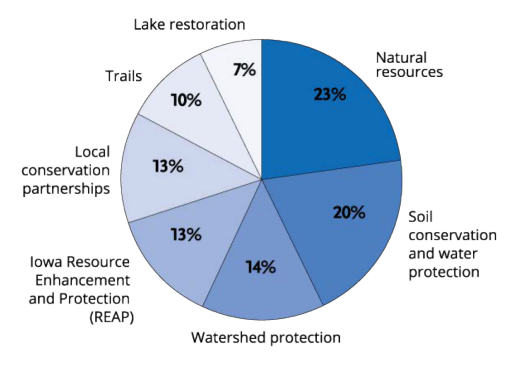
Iowa code spells out how those funds are to be spent (see diagram), with 60% of the funds earmarked for water quality initiatives.
To reduce bureaucracy and flexibility, the funds are administered through existing infrastructure, funneling to three state agencies:
- The Department of Ag and Land Stewardship (IDALS)
- The Department of Natural Resources (DNR)
- The Department of Transportation (DOT)
“Put simply, the fund would mean more money in farmer’s pockets for programs administered by the Iowa Department of Ag and Land Stewardship that already help farmers implement conservation practices,” Markham says. “Without it, we can’t fund this work at the scale and scope required to make a real difference.”
Trust fund expenditures would be audited annually, and the program includes farmer-friendly safeguards. For example, the funds may only be used for voluntary practices, and it cannot be directed toward regulatory efforts, enforcement actions, eminent domain, condemnation, or litigation.
Trust won’t pit DNR against farmers
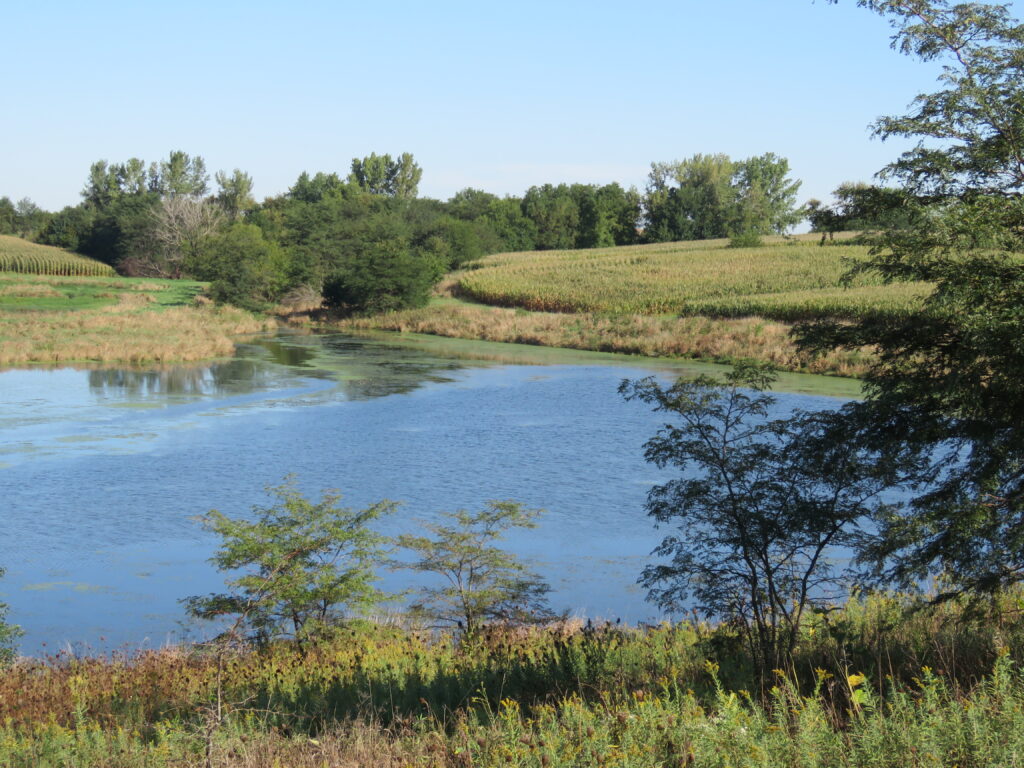
A common misconception about the trust is that the DNR would use the money to buy high-production land and compete with farmers. In reality, Markham says over half of the land the DNR purchases is in the 100-year floodplain. “We have 80 years of data that shows our rate of flooding has more than doubled,” she continues.
“We are not setting beginning farmers up for success by expecting them to farm this type of land,” she says. “The DNR would pay farmers directly for land, which will often be used for wetland easements that increase holding capacity for flooding and filters nitrates out of the water, all things that are important to farmers. Land purchase is a small component of what the fund is intended to do.”
Good for farmers’ bottom line … and beyond
Supporters can also see the potential for the trust to improve farmers’ balance sheets, especially during lean years. “IWILL is going to pay farmers to put in cover crops and other infield and edge of field practices — efforts some farmers are already pursuing but not getting paid for,” Markham says.
Beyond the appeal of a stable payment in a time when markets are anything but, the actual practices farmers implement make them part of the solution and have real benefits to their land, water and communities.
Why now?
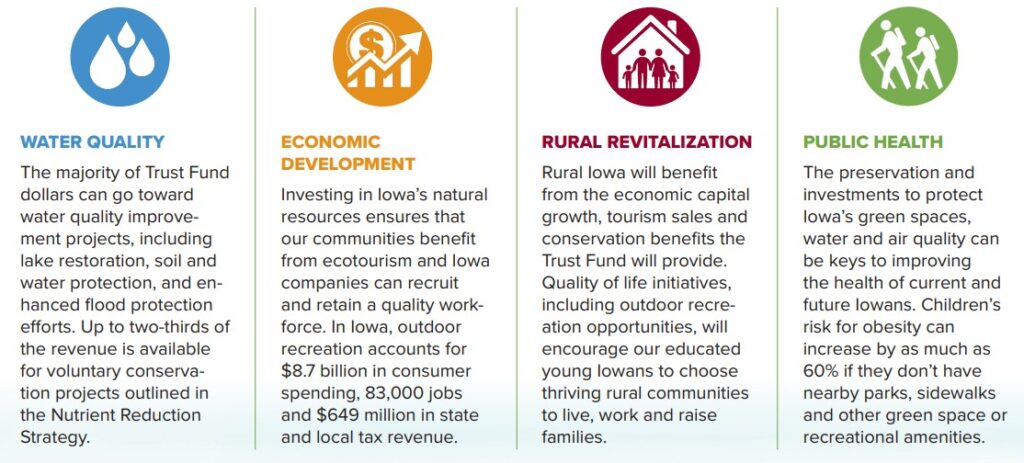
You might be asking yourself why, after 16 years, IWILL hasn’t thrown in the towel and is instead renewing its push for action. The answer is simple: It’s more important than ever — for Iowa’s water quality, public health, economic competitiveness and farmers’ cash flow.
There are also some strategic reasons why now makes sense:
- Iowa is facing a budget deficit in fiscal year 2026. In light of that shortfall, there may be greater appetite for the sales tax increase.
- Statewide polling shows support for the trust is high and rising. The latest survey found that 80% of Iowans favor funding the trust, even knowing that it would mean an increase in their sales tax.
- With uncertainty around federal conservation funding, a guaranteed source of support for state-level programs tailored to Iowa farmers is more important than ever.
Markham urges Iowans to tell lawmakers it’s time to finally fund the Natural Resources and Outdoor Recreation Trust Fund. “Reach out to your legislators this winter and remind them that 16 years is too long,” she says. “Farmers need these funds to do the work in and around their fields that improves water quality, strengthens public health, and supports rural communities. Pledge your support — and make your voice is heard.”