By: The Nature Conservancy
June 2026
Every farm has them — the corner that is hard to square up with equipment, the low spot that stays wet or washes out after a heavy rain, or the field edge along a creek that never seems to perform.
Those acres can be frustrating. But they can also be an opportunity.
Converting them to buffer strips, wetlands, grassed waterways, saturated buffers or oxbows can help protect soil, improve water quality and make the rest of the field easier to manage. They can also create a beautiful pocket on your land.
Start where the field is showing stress
Farmers can start their conservation planning by answering this question: Where are your problem areas?
Maybe water cuts through the same area after every big rain. Perhaps a field entrance or corner is difficult to farm and highly compacted. Maybe you have an area that gets flooded when a stream comes out of its banks every other season.
These are the low-hanging fruits when it comes to conservation.
Put field edges and flow paths to work
These challenging areas can create opportunities to address erosion and nutrient loss, improve water quality and perhaps even supply a more reliable revenue stream on less productive acres.
Buffers along creeks, rivers and drainage ditches help capture sediment and nutrients before they leave the field. A new Streamside Buffer Initiative pilot program in key Iowa watersheds is helping farmers and landowners transition row-crop acres into riparian buffers by providing financial support for these practices.
Some fields have obvious drainageways where water concentrates during rain events. Grassed waterways can help manage those flows by channeling water through perennial vegetation, reducing erosion and helping keep sediment and nutrients where they belong.
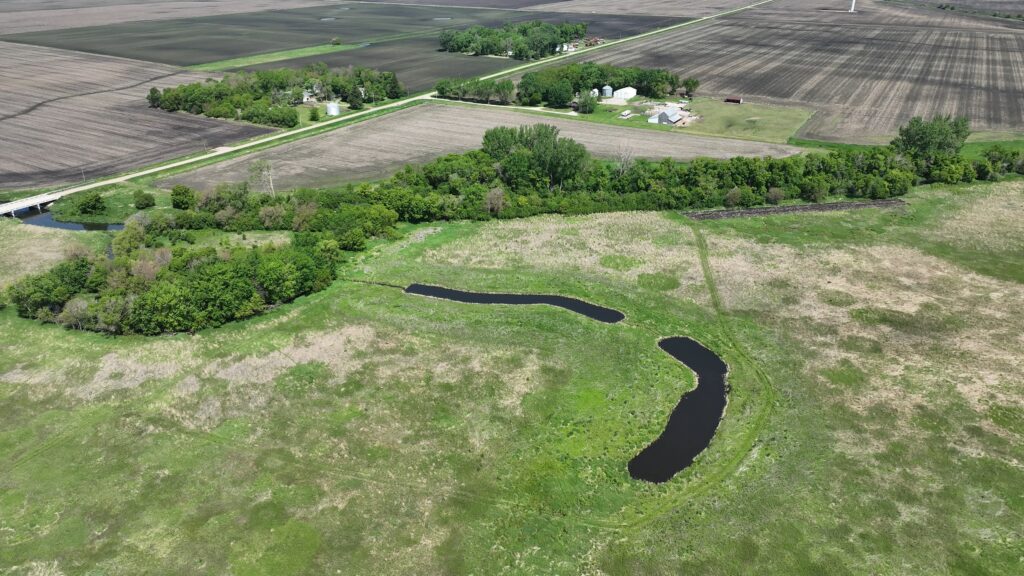
Oxbow restoration projects provide another opportunity to manage water while filtering nitrates and creating habitat for wildlife. Cost-share opportunities are available for converting these pockets of often unproductive ground into these relatively inexpensive and low-maintenance conservation features.
Opportunities on tile-drained fields
On flat, tile-drained ground, water often leaves the field below the surface rather than across it. Farmers have several edge-of-field options that improve water quality while taking little to no ground out of production.
- Saturated buffers: These low-maintenance conservation features modify tile drainage systems to divert water through the soil of a vegetated buffer strip.
- Denitrifying bioreactors: These work by routing water through a trench filled with woodchips, providing a carbon source for bacteria that converts nitrates into harmless nitrogen gas.
- Drainage water management systems: These systems use stop logs to regulate the timing and amount of water discharged from tile, reducing runoff and giving farmers more control managing wet and dry periods. These systems work well with saturated buffers.
A practical place to begin
If you have a problem area, consider whether a conservation feature might help. A crop adviser, retail agronomist, conservation district representative, Natural Resources Conservation Service expert or local conservation partner can help evaluate which practice best fits the site and identify cost-share and grant opportunities. Start by answering these questions.
- Where are your least productive acres?
- Where does water naturally flow or collect?
- Is water leaving through surface runoff, tile drainage or both?
Conservation can feel more approachable when it starts with awkward corners, wet spots, drainageways and field edges that may not be the easiest or most productive acres to farm. Converting those acres into a conservation feature (and pocketing some money for doing so) can benefit your farm and your peace of mind.
To see what cost-share opportunities might be available, check out Conservation Connector. Users can look through a suite of cost-share programs, filtering by practice, county, incentive type, etc. The Conservation Compass is another resource for finding cost-share opportunities specific to Iowa.
You can learn more about the many conservation practices that can increase the resiliency of your soil and quality of your water here.